



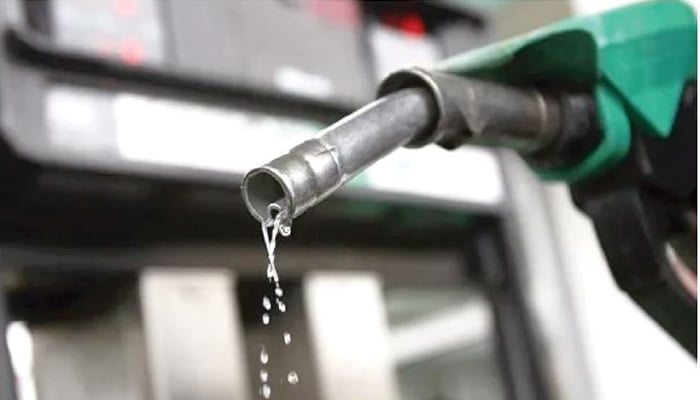
The Nigerian Government says it is negotiating a ₦1,350 per litre ceiling on the ex-gantry or landing cost of petrol, under a proposed price-modulation arrangement aimed at shielding Nigerians from sharp fluctuations in global crude prices and exchange rates.
The government says the mechanism would allow refiners and importers to absorb temporary increases in costs and recover the difference when market conditions improve, thereby reducing volatility in petrol prices.
The Minister of Finance and coordinating Minister of the Economy, Mr. Taiwo Oyedele disclosed this at a press briefing, explaining that the ceiling would be reviewed monthly, with the figures published to ensure transparency.
“This is neither a subsidy nor a price control: it is designed to smooth prices over time rather than suppressing them,” he said.
He explained that keeping petrol prices relatively stable would be preferable to sharp movements that could further unsettle transport fares and the prices of goods and services.
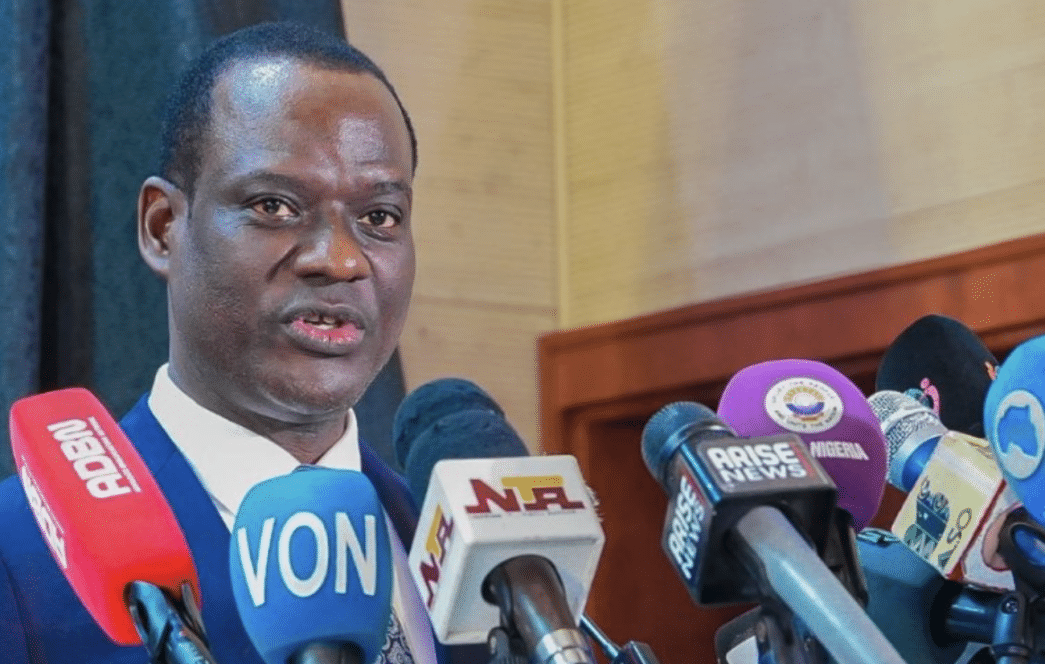
“The reasoning is simple. 1,400 naira a litre today and 1,400 tomorrow is better than 1,500 today and 1,300 tomorrow, because volatility itself adds to uncertainty and cost,” the Minister said.
Prioritise Public Transporters
The government also announced a 30-day margin discount on petrol dispensed at NNPC Limited stations, with priority given to public transporters nationwide, as part of additional measures to ease the burden on consumers.
Oyedele said the government was also considering forward sales of crude to domestic refineries as production increases, arguing that the arrangement would help shield pump prices from volatility in the international market.
The Minister said the government recognised that existing measures had not fully relieved the pressure on households and businesses.
“We recognise that these measures, important as they are, do not fully relieve the pressure households feel today. So the government is taking further steps,” he said.
The government is also increasing funding for cash transfers to vulnerable households and subsidised credit for small businesses and consumers, while accelerating the rollout of compressed natural gas infrastructure and vehicles.
According to the Minister, an excess profit tax is also being considered for operators who take undue advantage of consumers along the energy value chain.
He said proceeds from such a measure would be used exclusively to cushion the impact of fuel prices through transport support or vouchers for vulnerable urban minimum-wage earners.
Reject Fuel Subsidy Calls
The Government, however, rejected calls for a return to blanket fuel subsidy, arguing that such a move would impose significant pressure on public finances and could reverse recent economic gains.
The Minister estimated that returning petrol to its pre-reform price would cost more than ₦20 trillion annually, while a ₦500 per litre subsidy could cost over ₦16 trillion a year.
“A subsidy does not lower the cost of fuel. It only changes how it is paid, and when.”
Oyedele added that subsidy removal released ₦15.8 trillion to the Federation Account between June 2023 and December 2025, with ₦10.4 trillion going to states and local governments.
The government said its current approach was to provide targeted and temporary relief without undermining fiscal stability.
He also highlighted tax and duty waivers on petroleum products, the naira-for-crude arrangement for local refiners, CNG deployment and stronger regulatory oversight as measures already helping to moderate fuel costs.
Speaking on initiatives to encourage other sources of energy consumption, the minister said more than 120,000 vehicles now operate on CNG, supported by over 400 conversion centres and 96 refuelling stations, while more than 550 CNG buses have been deployed.
He noted that fares had fallen by between 30 and 50 per cent in areas where CNG buses are operating.
The government further announced plans for a National Strategic Fuel Reserve, which it said would allow refined products to be released during major global disruptions or artificial scarcity.
“This is not a subsidy and it does not fix prices, rather it secures supply and reduces price volatility,” the Minister said.
The Minister maintained that the measures were intended to ensure that Nigerians receive immediate relief while protecting the broader economy from the fiscal risks associated with a return to blanket fuel subsidy
