



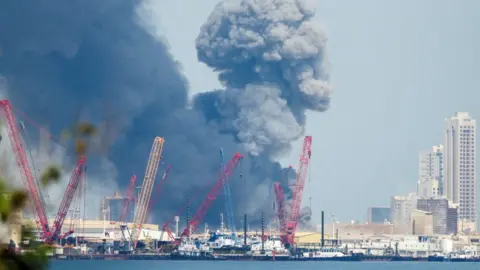
In a dramatic escalation of regional conflict, Iran launched a broad retaliatory missile offensive early on Saturday, targeting United States military bases across the Middle East, striking the US Navy’s Fifth Fleet facility in Bahrain and prompting a wave of defensive actions and airspace closures across the Gulf.
Bahrain’s national communications authority confirmed that a missile impacted the service centre of the US Navy’s Fifth Fleet in Juffair, a critical hub for America’s naval command in the region. Sirens wailed and smoke was seen rising over the area as authorities urged residents to take shelter.
Across the Gulf, several states with significant US military presence reported intercepting incoming missiles or taking defensive measures. In Qatar, the Defence Ministry said its Patriot air defence systems intercepted Iranian missiles over its territory, where the key Al Udeid Air Base is located.
The United Arab Emirates temporarily closed its airspace after explosions were reported in Abu Dhabi, and at least one person was reported killed, following the interception of Iranian missiles, according to official sources. Air raid sirens also sounded in Kuwait and Jordan as defence systems engaged the incoming threats in their skies.
Iran’s unprecedented strikes come in response to earlier coordinated military attacks by the United States and Israel on Iranian territory, which Tehran described as violations of its sovereignty. Iranian state media and officials said that US military bases in the region were considered legitimate targets in retaliation.
The strikes have triggered an immediate security lockdown across the region, with multiple Gulf nations closing their airspace to civilian traffic and major airlines suspending flights.
While authorities continue to assess the full scope of damage and potential casualties, the attacks mark a significant expansion of hostilities that could have far-reaching implications for regional stability, global energy markets and diplomatic relations
