



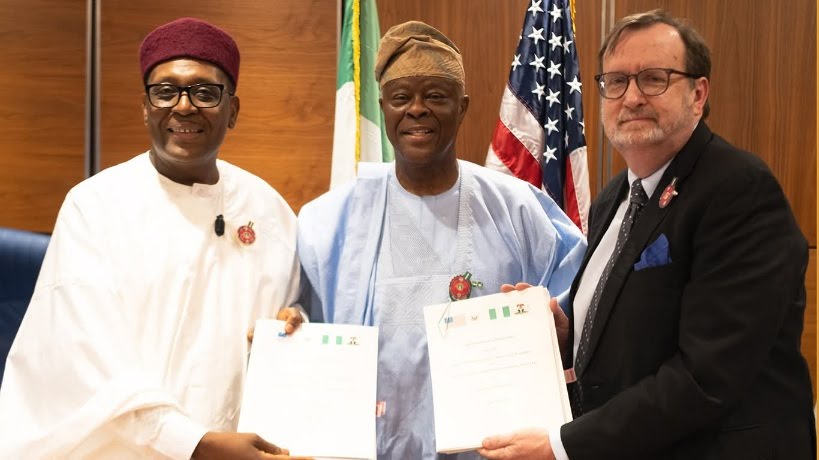
The United States and Nigeria have signed a five-year, $5.1bn health cooperation Memorandum of Understanding (MoU) aimed at boosting Nigeria’s healthcare delivery, including targeted support for hundreds of faith-based health facilities in the country.
Under the agreement, the US intends to provide $2.1bn in health assistance while Nigeria has pledged to invest $3bn in new domestic health spending within the same period.
The combined $5.1bn commitment represents the largest co-investment made by any partner country under the America First Global Health Strategy to date, according to a statement by the US Embassy in Nigeria on Sunday.
The MoU is designed to strengthen Nigeria’s healthcare system, expand access to essential services and reduce preventable deaths, while also advancing US foreign policy objectives by addressing global health threats with cross-border implications.
A major component of the agreement is the inclusion of approximately $200m in dedicated US support for more than 900 Christian faith-based healthcare facilities across Nigeria. These facilities will receive funding to expand integrated services for HIV, tuberculosis, malaria, and maternal and child health, particularly in rural and underserved communities where public healthcare provision remains thin
Christian faith-based clinics account for roughly 10 percent of healthcare providers in Nigeria but serve more than 30 perceent of the country’s estimated 230 million people, according to the US, noting that many of these facilities operate in hard-to-reach areas where government hospitals are scarce, and play a central role in delivering primary care, antenatal services and infectious disease treatment.
“With Nigeria facing one of the highest maternal and child mortality rates globally and accounting for 30% of the global malaria burden, this U.S. assistance protects Nigerian and American lives while strengthening our bilateral partnership,” the statement read.
The statement added that the targeted support reflects a recognition of the outsized role played by faith-based providers in Nigeria’s health system, as well as their capacity to deliver care at community level. The funding is expected to improve service integration, expand treatment coverage and strengthen referral networks, particularly for women and children.
According to US authorities, the partnership would help make America “safer, stronger and more prosperous” by reducing the spread of infectious diseases and strengthening health security in Africa’s most populous country.
