


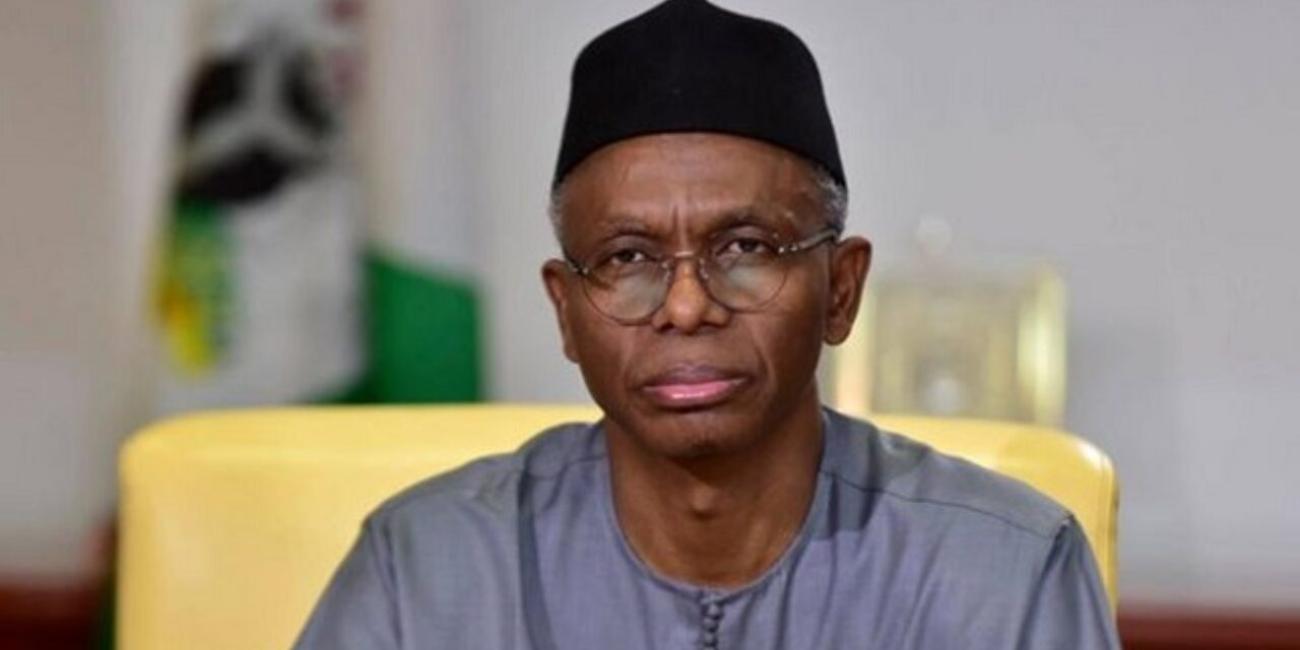
The Independent Corrupt Practices and Other Related Offences Commission (ICPC) has confirmed that the former Governor of Kaduna State, Malam Nasir El-Rufai, is currently in its custody.
In a press release issued by the Commission’s Head of Media and Public Communications, J. Okor Odey, the anti-graft agency stated that the former governor was detained as of the close of work on Wednesday, February 18, 2026.
According to the ICPC, El-Rufai’s detention is in connection with ongoing investigations, although the specific details of the allegations against him were not immediately made public.
The ICPC detention marks another chapter in the legal troubles facing the former governor.
It follows a previous high-profile arrest by the Economic and Financial Crimes Commission (EFCC) concerning allegations of multi-billion naira financial misappropriation during his eight-year tenure as governor.
A Kaduna State House of Assembly ad-hoc committee had earlier indicted the El-Rufai administration for allegedly siphoning about ₦432 billion through questionable contracts and money laundering.
While El-Rufai has consistently denied these allegations, describing them as politically motivated “witch-hunts,” both the EFCC and now the ICPC have intensified their probes into his administration’s financial dealings.
The ICPC’s confirmation of his detention suggests that the agency may have uncovered new evidence or is pursuing a parallel investigation into different sets of petitions against the former governor.
“The Independent Corrupt Practices and Other Related Offences Commission (ICPC) writes to state that Malam Nasiru El-Rufai the former Governor of Kaduna state is in our custody as at close of work, Wednesday the 18th day of February, 2026. Malam Nasiru El-Rufai is in the custody of the Commission in connection with investigations,” the agency said in its statement.
On Wednesday, SaharaReporters reported that the former Kaduna State governor had spent two nights in EFCC custody over allegations of large-scale corruption and embezzlement during his eight-year tenure.
Sources familiar with the matter said the EFCC initially granted him administrative bail on the condition that a Permanent Secretary and a Director in a Federal Ministry stand as sureties.
However, when the Permanent Secretary reportedly arrived at the commission’s office to complete the bail formalities, the agency allegedly hesitated and later declined to proceed with the arrangement.
It was further learned that the Permanent Secretary subsequently withdrew from the bail process after allegedly receiving threats, raising concerns about possible intimidation and interference in the case.
SaharaReporters further reported that El-Rufai was also scheduled to appear on Wednesday before the ICPC for questioning over separate corruption allegations.
Meanwhile, the Department of State Services (DSS) has also filed charges against the former Kaduna governor.
The DSS filed charges against El-Rufai at the Federal High Court in Abuja, over allegations that he unlawfully intercepted the phone communications of the National Security Adviser, Nuhu Ribadu.
Court documents indicate that the charges, marked FHC/CR/99/2026, were filed in the name of the Federal Republic of Nigeria as complainant, with El-Rufai, 65, listed as the sole defendant.
The charge sheet is dated February 16, 2026.
According to the documents, the prosecution alleges that El-Rufai made incriminating admissions during a televised interview on February 13, 2026, while appearing as a guest on Arise TV’s Prime Time programme in Abuja.
Count One alleges that the former governor admitted to unlawfully intercepting the phone communications of the NSA, an act said to be contrary to and punishable under Section 12(1) of the Cybercrimes (Prohibition, Prevention, etc.) Amendment Act, 2024.
In Count Two, prosecutors allege that El-Rufai acknowledged knowing and relating with individuals who allegedly intercepted the NSA’s communications, but failed to report them to relevant security agencies, an offence cited under Section 27(b) of the same Act.
While count three further accuses El-Rufai and “others still at large” of using technical systems that allegedly compromised public safety and national security by unlawfully intercepting the NSA’s phone communications, contrary to Section 131(2) of the Nigerian Communications Act, 2003.
The charge sheet lists Ernest O.M., Owan O.M., U.M. Bulla, C.S. Eze (PhD), and E.G. Orubor as counsel for the prosecution, acting on behalf of the Department of State Services
