



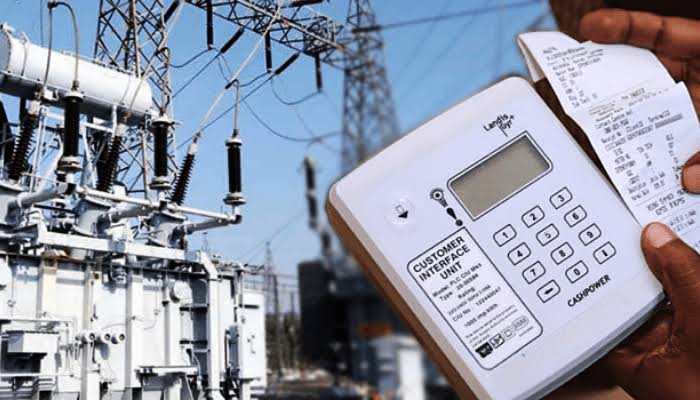
In a major shift in Nigeria’s fiscal policy, the Federal Government has announced it will no longer bear the cost of electricity subsidies alone. Starting with the 2026 budget, the financial burden will be shared across the federal, state, and local governments.
The Director-General of the Budget Office of the Federation, Tanimu Yakubu, disclosed the directive on Monday during a training session for Ministries, Departments, and Agencies (MDAs) in Abuja. He revealed that President Bola Tinubu has ordered the operationalization of existing electricity sector laws to create a “practical, transparent, and enforceable” sharing framework.
End of “Federal Residual”: The FG will stop treating electricity subsidies as an open-ended federal liability.
All tiers of government must clearly identify and fund any “affordability interventions” (subsidies) they choose to maintain for their constituents.
By spreading the cost, the government aims to give all tiers of leadership a stake in promoting cost-reflective tariffs and sector stability.
Funding will be channeled through the Power Assistance Consumers Fund (PACF) to support vulnerable households rather than universal subsidies.
“In 2026, we will stop pretending that this bill can be left to the Federal Government alone,” Yakubu stated. “When tariffs are held below cost, a gap is created. That gap is a subsidy, and a subsidy is a bill.”
The move follows recent reforms that moved electricity from the Exclusive to the Concurrent list, allowing states to regulate their own power markets. Currently, over 18 states—including Lagos, Edo, Ondo, and Kaduna—have established their own regulatory agencies.
Under the new 2026 framework, states that benefit politically from lower electricity prices for their residents will now be required to contribute to the funding of those price gaps.
Policy Choice If a state mandates lower tariffs, it must fund the difference.
Budgeting MDAs must disclose all subsidy-related costs in their 2026 proposals.
Debt Prevention The goal is to prevent the buildup of “hidden liabilities” that have historically crippled the power market.
The Budget Office also announced that the 2026 fiscal year will mark a departure from “rollover budgeting.” Yakubu introduced a “single-train” framework, emphasizing that the government will prioritize project financing over simply listing hundreds of uncompleted projects.
“A long list of projects is not a development strategy; it is often a map of disappointment,” Yakubu added, noting that only projects that are “delivery-ready” and “finance-ready” will make it into the 2026 budget
