



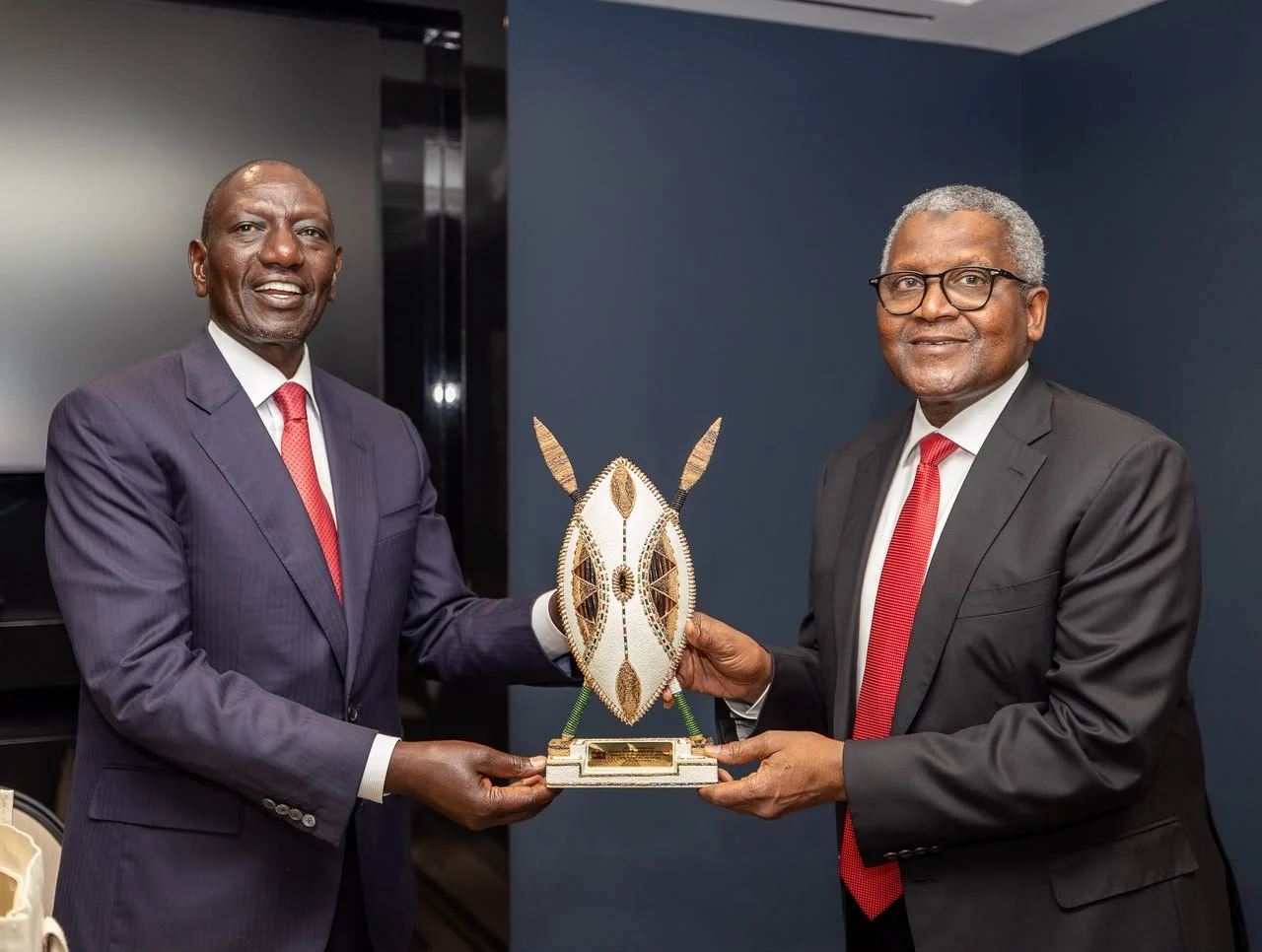
Construction of the East Africa Refinery at Lamu begins on Wednesday, Sept. 30, with President William Ruto leading the ceremony.
Deputy President Kithure Kindiki confirmed the date on Tuesday after a final planning meeting, saying heads of state from East Africa and beyond had been invited alongside members of the local community, and that the government was completing arrangements for protocol, security and logistics.
The refinery is backed by Aliko Dangote’s Dangote Industries and the Africa Finance Corporation, and the Kenyan government puts its cost at 2.2 trillion shillings, about $17 billion. Estimates have moved considerably, with figures between $15 billion and $20 billion published this year depending on whether port infrastructure is included.
It is designed to process 700,000 barrels of crude a day, which would make it the largest refinery in East Africa and the second largest on the continent after Dangote’s plant in Lagos. Construction is expected to take about three years, and the government projects around 60,000 jobs.
About 70% of the cost is to be financed with debt.
Once it runs, the refinery is meant to supply Kenya, Uganda, Tanzania, Rwanda, South Sudan and the Democratic Republic of Congo, cutting the region’s dependence on imported fuel and reducing the foreign exchange Kenya spends buying it.
Its commercial case rests on crude the region does not yet produce. The plant needs regional output above 600,000 barrels a day, against projections of 350,000 from South Sudan, 250,000 from Uganda and 120,000 from Kenya. Kindiki said the refinery would connect to Kenya’s own production, which the government expects to begin towards the end of this year.
Dangote has offered East African governments a combined 30% of the project. Kenya has been offered 10%, worth about $500 million, and Ethiopia and Rwanda have expressed interest in the rest.
Ruto met Dangote in New York on Sept. 21, on the sidelines of the United Nations General Assembly, to discuss financing.
What Dangote will not build in Kenya is a cement plant.
Chief executive Arvind Pathak told Dangote Cement’s Capital Markets Day in London on Sept. 21 that the country does not appear in the company’s plan to reach 80 million tonnes of annual capacity, which includes 25 million tonnes of new expansion. Kenya is not figuring in that, he said, and the company does not envisage a plant there in the medium term.
The obstacle is rock. Dangote has secured large, high-quality limestone deposits in several markets where it already operates and has not found one in Kenya that meets its requirements for size, quality and distance from a plant. The company says it would reconsider if it does.
It has been looking for years. Dangote registered Dangote Cement Kenya and Dangote Quarries Kenya in 2017 and won permission to explore limestone at Kanziku-Simisi in Kitui South, for a project that was costed at about $355 million and revised from two plants of 1.5 million tonnes each to a single three-million-tonne operation. Nothing was built.
Its East African cement expansion will go to Ethiopia instead, where the West Shewa plant at Mugher is running at full capacity and being enlarged, and to Tanzania, where it is optimising its Mtwara plant.
Kenyan investors are also being kept out of the refinery share sale for now. The Capital Markets Authority said on Sept. 21 that the offer had never been submitted to it for approval and is regulated only in Nigeria, and warned people to check who they hand their money to. Nairobi Securities Exchange chief executive Frank Mwiti has said a cross-listing in Nairobi is on the table and that the exchange is talking to Dangote, the Nigerian Exchange and Nigeria’s securities regulator.
The offer closes on Oct. 13.
