



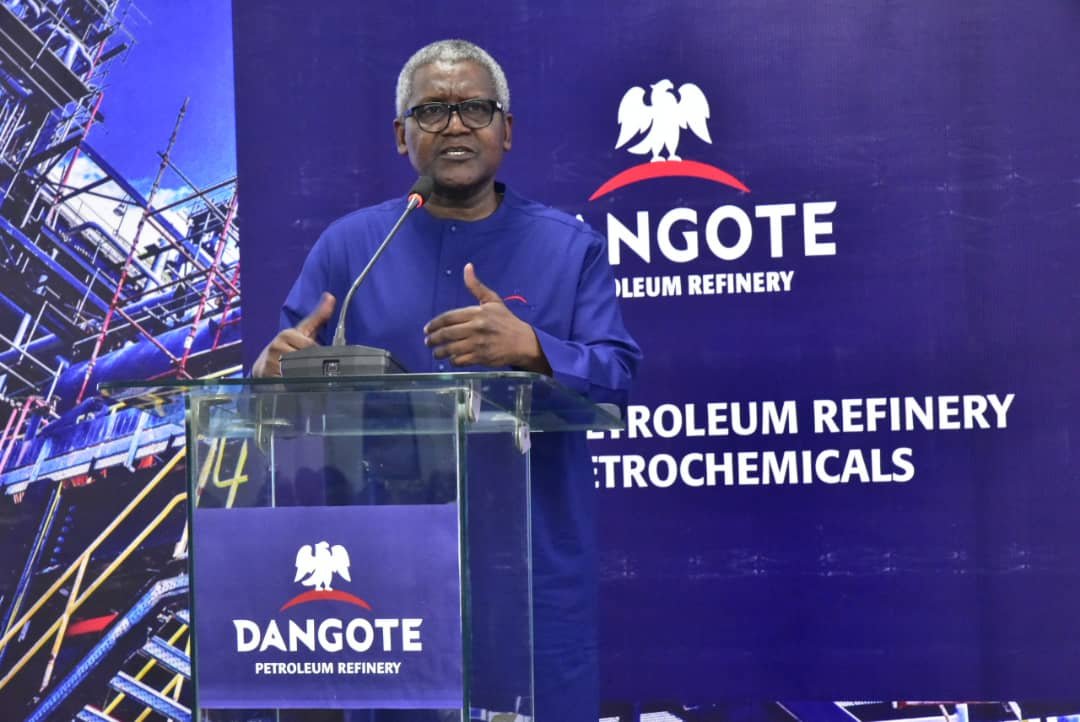
Aliko Dangote is accelerating plans to list shares of his flagship $20 billion Dangote Petroleum Refinery and Petrochemicals on multiple African stock exchanges, positioning the move as a landmark test for regional capital market integration.
The initiative, discussed in high-level meetings with exchange leaders from Nairobi to Johannesburg, aims to deliver one of the biggest equity offerings in African history and shift how the continent finances its most ambitious assets.
The strategy centres on a primary listing on the Nigerian Exchange, with coordinated cross-border access for investors across the Johannesburg Stock Exchange, the Ghana Stock Exchange, the Ethiopian Securities Exchange, the Bourse Régionale des Valeurs Mobilières, and the Nairobi Securities Exchange.
Advisers Stanbic IBTC Capital, Vetiva Capital Management and FirstCap are steering the transaction, targeting an offering of 5-10% of the company that could raise to $5 billion. The timeline points to a prospectus filing in April, a roadshow in May and a potential listing window between June and July 2026.
The 650,000-barrel-per-day refinery, already operational and reshaping Nigeria’s fuel supply while exporting to neighbouring markets, provides a tangible success story at a time when energy security remains a pressing priority across Africa.
Redefining capital flows for African industry
By opening the asset directly to regional pension funds, retail investors and institutions, the IPO seeks to reverse the pattern of African mega-projects being financed and owned predominantly from overseas.
Proceeds would support aggressive expansion plans, including more than doubling refining capacity and scaling fertiliser production, with the group signalling a need for tens of billions in additional capital over the coming years.
For international observers, the transaction highlights both opportunity and risk. A successful multi-market rollout could boost liquidity, build deeper domestic investor bases and encourage other pan-African champions in mining, infrastructure and renewables to follow.
It also crystallises value for Dangote after years of heavy investment in an asset long viewed as high-risk. Failure to deliver smooth execution or adequate governance standards, however, could dent confidence in cross-border listings for years.
With global energy markets still volatile and African governments focused on reducing import dependence, the Dangote refinery’s scale and track record offer a compelling narrative. If the IPO lands cleanly, it will demonstrate that Africa’s biggest industrial bets can be funded, and owned by Africans themselves, potentially reshaping how the continent attracts and retains long-term capital.
