



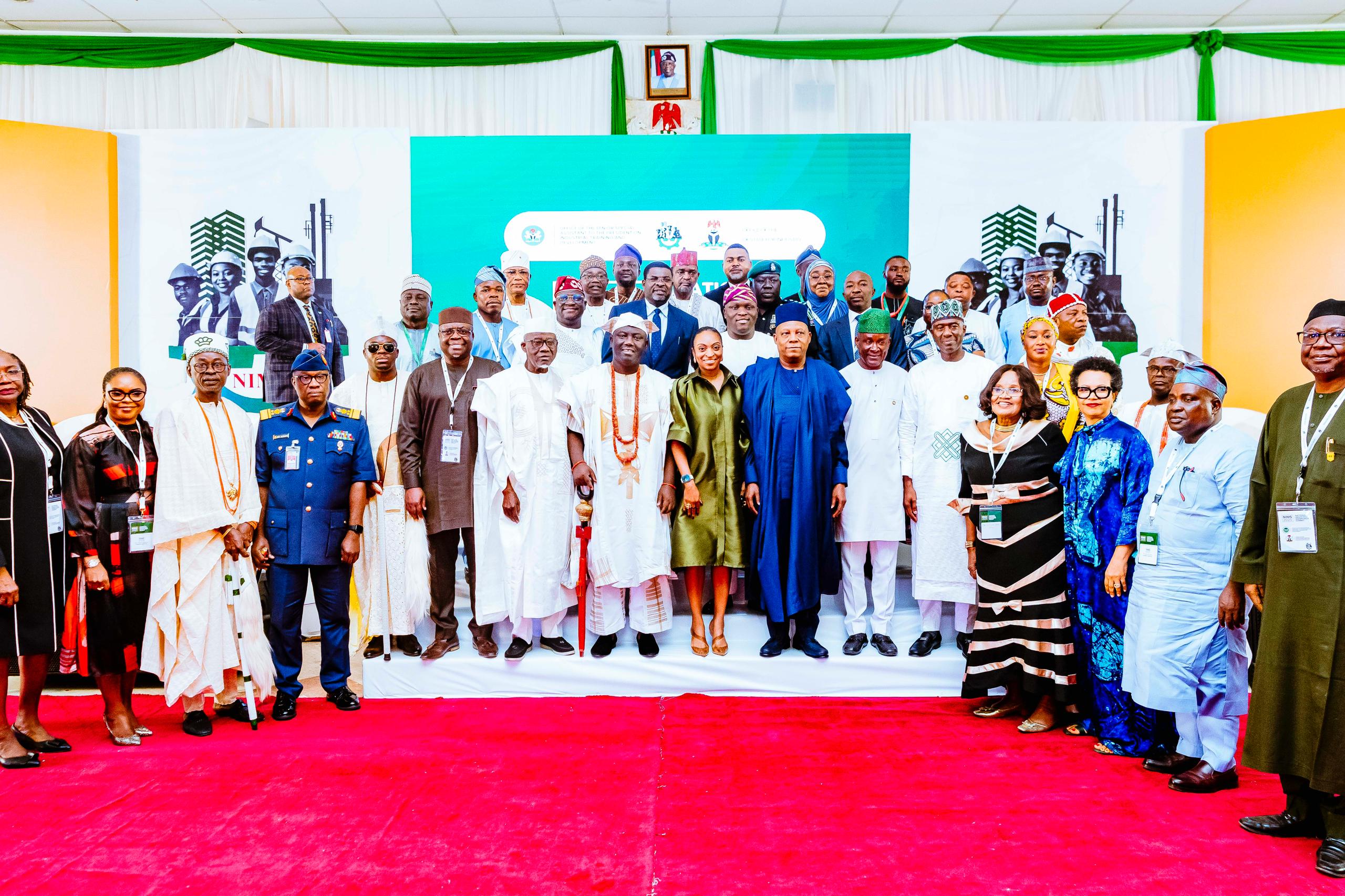
President Bola Tinubu on Tuesday, August 12, unveiled a groundbreaking initiative—the country’s first-ever National Industrial Manpower Development Policy—reiterating that Nigeria’s greatest asset is its people, not its natural resources. He presented the plan during a keynote address at the National Industrial Manpower Summit (NIMS) 2025, held at the State House Conference Centre in Abuja.
The president, represented by Vice President Kashim Shettima, highlighted the urgent need to close the widening gap between educational outcomes and industry needs to unlock Nigeria’s economic potential. “For a nation with a median age of about seventeen, Nigeria is an incredibly young country. This youthfulness is a gift, but it is also a responsibility. We must make our young people not just a demographic statistic but a central component of our policy-making process,” he said.
According to a statement by the VP’s media aide, Stanley Nkwocha, President Tinubu stressed that human capital development, combined with infrastructure growth and sound policy, is essential for national progress. “We cannot afford to divest from our people because the world will not pause to wait for us,” he warned. He further affirmed that the summit was convened not merely to discuss ideas but to produce actionable recommendations that would form the basis of the new manpower policy, which his administration intends to implement with urgency.
“Our mission is to align the education and training of our young people, and indeed the larger workforce, with the needs of industry. We must reverse the mismatch between what our institutions produce and what our economy requires. This cannot be realised unless we foster robust collaboration between the public and private sectors to prepare young Nigerians for the demands of today’s job market,” President Tinubu explained.
Acknowledging the rapid technological changes shaping the global economy, Tinubu cautioned that Nigeria faces the risk of a growing skills gap unless it adapts to these new realities with a continually evolving workforce. He called for the establishment of an industrial skills database, sector-specific manpower roadmaps, and a heightened focus on vocational and industrial training. “Welders, machinists, technicians, software engineers, and factory operators must be treated with the dignity, respect, and opportunity they deserve,” he stated.
He closed his address by urging all stakeholders to commit themselves to transforming Nigeria’s approach to manpower development and industrial growth.
Minister of State for Industry, John Enoh, praised the president’s leadership, noting the historic significance of appointing the country’s first Senior Special Assistant on Industrial Training and Development. “There are moments in a nation’s journey when history itself seems to lean forward. When history does so, it is to watch and see whether we will be able to take advantage of the opportunities before us,” he said, emphasising that the summit marks a critical juncture for Nigeria to realise its economic potential.
Meanwhile, Minister of Industry, Trade, and Investment, Jumoke Oduwole, underscored the importance of national manpower in attracting and sustaining domestic investment crucial for industrialisation and economic growth. She pointed out that the summit provides an opportunity to advance bold, actionable strategies aligned with President Tinubu’s Renewed Hope Agenda, aimed at building a competitive and inclusive economy.
Labour and Employment Minister, Mohammed Dingyadi, described the summit as a vital platform for coordinated skills development and industrial manpower planning. He urged a move from fragmented individual efforts to unified collaboration where every stakeholder understands their role and contributes to a shared mission.
Senior Special Assistant to the President on Industrial Training and Development, Adamson Oluwatoyin, described the summit as a turning point in shaping Nigeria’s workforce future under President Tinubu’s vision. He emphasised that without a skilled, adaptable, and innovative workforce, the country’s industrial aspirations cannot be fulfilled.
Likewise, the Director General of the Industrial Training Fund (ITF), Afiz Oluwatoyin, hailed the summit as a valuable forum for national policy dialogue and resource mobilisation for skills development. He commended the president for appointing capable leaders to Ministries and Agencies focused on addressing industrial manpower challenges with new perspectives.
The National Industrial Manpower Summit 2025, themed “Manpower Development: The Bridge Between Potential and Productivity,” gathered government leaders, industry experts, academics, and international partners with the common goal of crafting strategic recommendations to drive Nigeria’s workforce development and economic transformation. President Tinubu’s leadership marks a pivotal step towards harnessing the nation’s youthful population as the foundation for sustainable industrial growth and competitiveness.
