


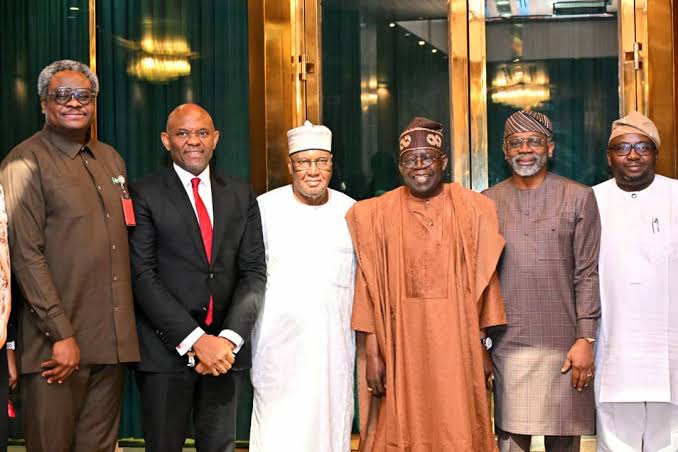
President Bola Ahmed Tinubu hosted a high-level meeting with the chairmen of Nigeria’s Power Generation Companies (GENCOs) at the State House in Abuja to address the escalating ₦4 trillion debt crisis threatening the country’s electricity supply chain.
The meeting, described as an emergency response to avert a potential collapse of the national power grid, follows earlier discussions between the Minister of Power, Adebayo Adelabu, and GENCO leaders, where the government pledged immediate action to resolve the financial strain.
The ₦4 trillion debt, comprising ₦2 trillion for power supplied in 2024 and ₦1.9 trillion in legacy debts, has severely hampered GENCOs’ operations, with industry leaders warning of dire consequences without urgent intervention.
During the meeting on Friday, President Tinubu reiterated the government’s commitment to stabilizing the power sector, emphasizing its critical role in Nigeria’s economic growth.
According to a statement from the Minister of Power’s Special Adviser on Strategic Communications, Bolaji Tunji, the government plans to settle a significant portion of the debt immediately, with the remainder to be cleared through financial instruments like promissory notes within six months.
“We recognize the urgency of this matter. The government is committed to resolving this debt to stabilize the sector and prevent further crisis,” Adelabu stated during preparatory talks.
The GENCOs, led by Col. Sani Bello, Chairman of Mainstream Energy Solutions and the Association of Power Generating Companies (APGC), highlighted the liquidity challenges crippling their ability to maintain infrastructure or secure loans.
Bello described the situation as a “national emergency,” warning that the entire power ecosystem could collapse without swift action.
Kola Adesina, Chairman of Egbin Power and First Independent Power Limited, echoed this sentiment, stressing that reliable electricity is vital for industries, homes, and health facilities.
Dr. Joy Ogaji, CEO of APGC, further outlined systemic issues, including chronic payment defaults, erratic gas supply, and the naira’s depreciation from ₦157/$1 in 2013 to ₦1,600/$1 in 2024, which has devastated maintenance budgets and loan repayments.
President Tinubu assured the GENCO leaders that his administration is prioritizing structural reforms to enhance market stability and reduce operational bottlenecks.
He urged the companies to collaborate with the government in raising public awareness about efficient electricity use and the need for cost-reflective tariffs, while promising continued subsidies for vulnerable populations.
Although no specific date for the debt repayment was confirmed, the meeting marks a critical step toward resolving the power sector’s financial woes and ensuring a stable electricity supply for Nigerians.
The outcome of this engagement is expected to shape the future of Nigeria’s power sector, with stakeholders hopeful that the government’s proposed interventions will prevent further grid instability and foster long-term sustainability
