



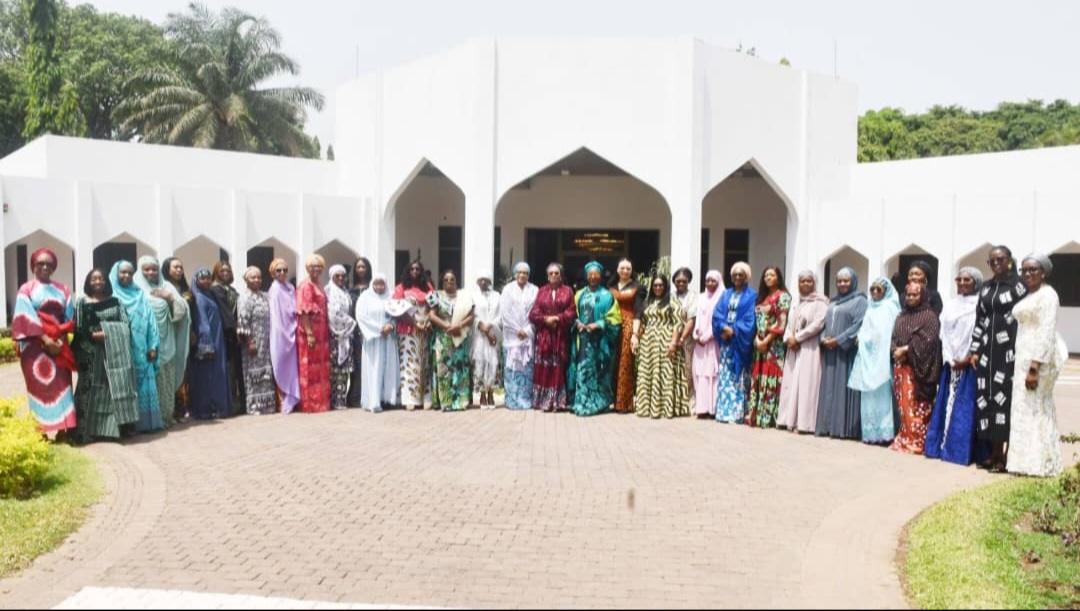
The First Lady of Nigeria, Oluremi Tinubu, on Thursday rallied wives of state governors at the Presidential Villa to take bold, independent action in tackling social and economic hardships, likening the Renewed Hope Initiative (RHI) to a child maturing to walk unaided.
Speaking at the inaugural quarterly meeting of state first ladies for 2026, she dismissed excuses amid challenges like banditry and kidnapping, urging them to prioritise youth empowerment, women’s skills and grassroots interventions tailored to their regions.
Drawing from her tenure as Lagos First Lady, Mrs Tinubu shared how initiatives like Spelling Bee competitions kept children in public schools despite dilapidated infrastructure, subtly complementing government efforts.
The meeting featured progress updates from state first ladies and mapped ambitious 2026 programmes, including a National Community Food Bank launch in April across the six geopolitical zones.
Linked to primary health care centres, the food bank will supply nutritional supplements for malnourished children aged 0–6 and pregnant women, backed by a new trust fund.
Mrs Tinubu stressed child nutrition as non-negotiable, declaring: “As usual, we are going to start on child nutrition. We are going to go at it aggressively… It is sad for a nation like ours to still be talking about child malnutrition at this level.”
Empowering youth and women at state level
Mrs Tinubu set a high bar for independence, stating at the meeting: “It’s like giving birth to a baby — the teething stage and learning how to walk. After a while, the baby is supposed to walk unaided, and that is what I want to see. I expect them (state First Ladies) to do what they are supposed to do.”
She praised state-specific efforts, such as Ekiti’s adire fabric hub and calls for large-scale cassava production or smoked fish processing in riverine areas, while encouraging boy-child mentoring programmes like Lagos’ ongoing initiative to reshape mindsets.
She noted that her past projects — Musical Fiesta and a Leadership Academy for girls, starting with 20 participants — served as models, with a push for similar self-reliance drives despite national support.
Environmental action also drew scrutiny at the meeting, with the First Lady appealing to the governors’ wives to immediately launch state environment clubs and urging youth groups to plant trees and combat plastic waste by 15 July 2026.
She also spotlighted agriculture and small enterprises for women, noting: “Encouraging women to produce cassava on a large scale… those in the riverine area, we want to see them doing smoked fish.”
She unveiled a packed 2026 agenda for vulnerable groups. She commended the robust support for the National Library Fund, spearheaded by governors’ wives, hailing it as a generational legacy that every Nigerian should proudly contribute to — just as she did with her N1 million donation to a similar project at the National Christian Centre.
The First Lady also highlighted the RHI National Scholarship Programme launching in September, urging early submission of results; the Elderly Support Scheme in December, where she challenged states to exceed the national target of 250 beneficiaries each — offering N100,000 grants, medical screenings and more; and initiatives on International Disability Day, including support for Persons with Disabilities and Business Recapitalisation Grants.
Mrs Tinubu announced digital expansion plans for 2026, with 21 additional learning centres (bringing the total to 31) across select states, plus ICT experience centres through telco partnerships and 12 new sites.
She further urged state first ladies to partner with the Mark Foundation on programmes like the Educating Leaders initiative, providing scholarships for two beneficiaries per state (from primary to secondary levels), along with distributions of books, pencils, crayons and other school materials.
Mrs Tinubu hailed an earlier meeting with traditional and religious leaders that sparked the launch of anti-malnutrition drives, targeting Nigeria’s 14 million births over the past two years amid mounting population growth pressures.
She wrapped up by emphasising accountability: “Despite our national efforts, I expect state First Ladies to effectively manage their states.”
