



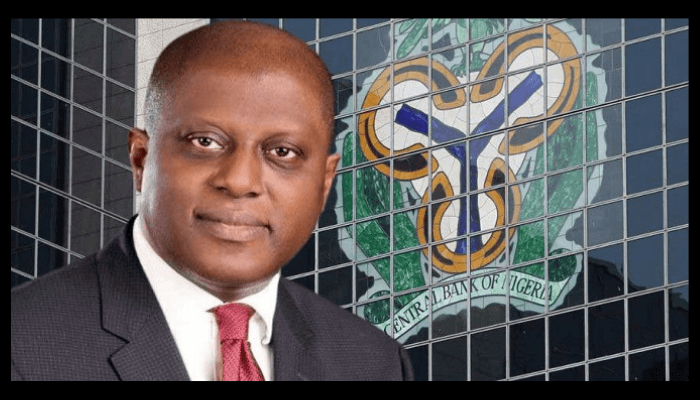
The Central Bank of Nigeria (CBN) has reiterated its resolve to drive inflation down to a single-digit range, underscoring its commitment to price stability as a cornerstone of Nigeria’s ongoing economic reform programme.
According to a statement from the CBN, its Deputy Governor in charge of Economic Policy, Muhammad Abdullahi, spoke during a strategic engagement with the Nigerian Economic Society (NES) and members of the academic community in Abuja.
Abdullahi said the apex bank remains firmly on course to achieve its medium-term inflation target of between 6 and 9 per cent. He described the transition towards an inflation-targeting monetary policy framework as a critical step in anchoring expectations, strengthening policy credibility, and fostering a stable macroeconomic environment conducive to investment and growth.
The Deputy Governor noted that inflation targeting provides a transparent and forward-looking approach to monetary policy, enabling the Bank to better manage price pressures while guiding market expectations. He added that the framework would help reduce uncertainty, lower risk premiums, and support long-term economic planning.
He highlighted that recent policy measures are already yielding tangible results, with headline inflation declining significantly from 34.8 per cent in late 2024 to 15.1 per cent in early 2026, attributing the progress to sustained monetary tightening, improved coordination with fiscal authorities, and a renewed focus on orthodox
He further explained that the CBN has withdrawn from quasi-fiscal activities and strengthened its institutional independence, moves he said are essential for building credibility and restoring confidence in the Bank’s policy direction.
On the foreign exchange front, Abdullahi noted that reforms such as rate unification and the introduction of electronic trading platforms have helped reduce volatility and improve transparency in the market. Additional measures, including bank recapitalisation and enhanced prudential oversight, have also contributed to financial system stability.
Despite the progress, he acknowledged that achieving single-digit inflation would require sustained discipline, consistent policy implementation, and resilience against external shocks such as global energy price volatility and geopolitical uncertainties.
Earlier in his remarks, the Director of Monetary Policy at the CBN, Victor Oboh, emphasised the importance of collaboration with academia in strengthening policy effectiveness.
He noted that public trust and clear communication are critical to the success of any monetary policy framework, particularly inflation targeting. Oboh stressed that researchers and economists play a vital role in shaping public understanding and influencing expectations, adding that evidence-based analysis is key to sound policymaking.
In his keynote address, President of the Nigerian Economic Society, Baba Musa, commended the CBN for its reform-driven approach and openness to stakeholder engagement. He reaffirmed the Society’s commitment to supporting the Bank’s efforts to stabilise the economy
The engagement featured a detailed presentation on Nigeria’s transition to inflation targeting. Participants drawn from Nigerian universities and other public and private institutions lauded the CBN’s reform agenda, especially its transition to inflation targeting, and reiterated their commitment to support the Bank’s efforts.
