



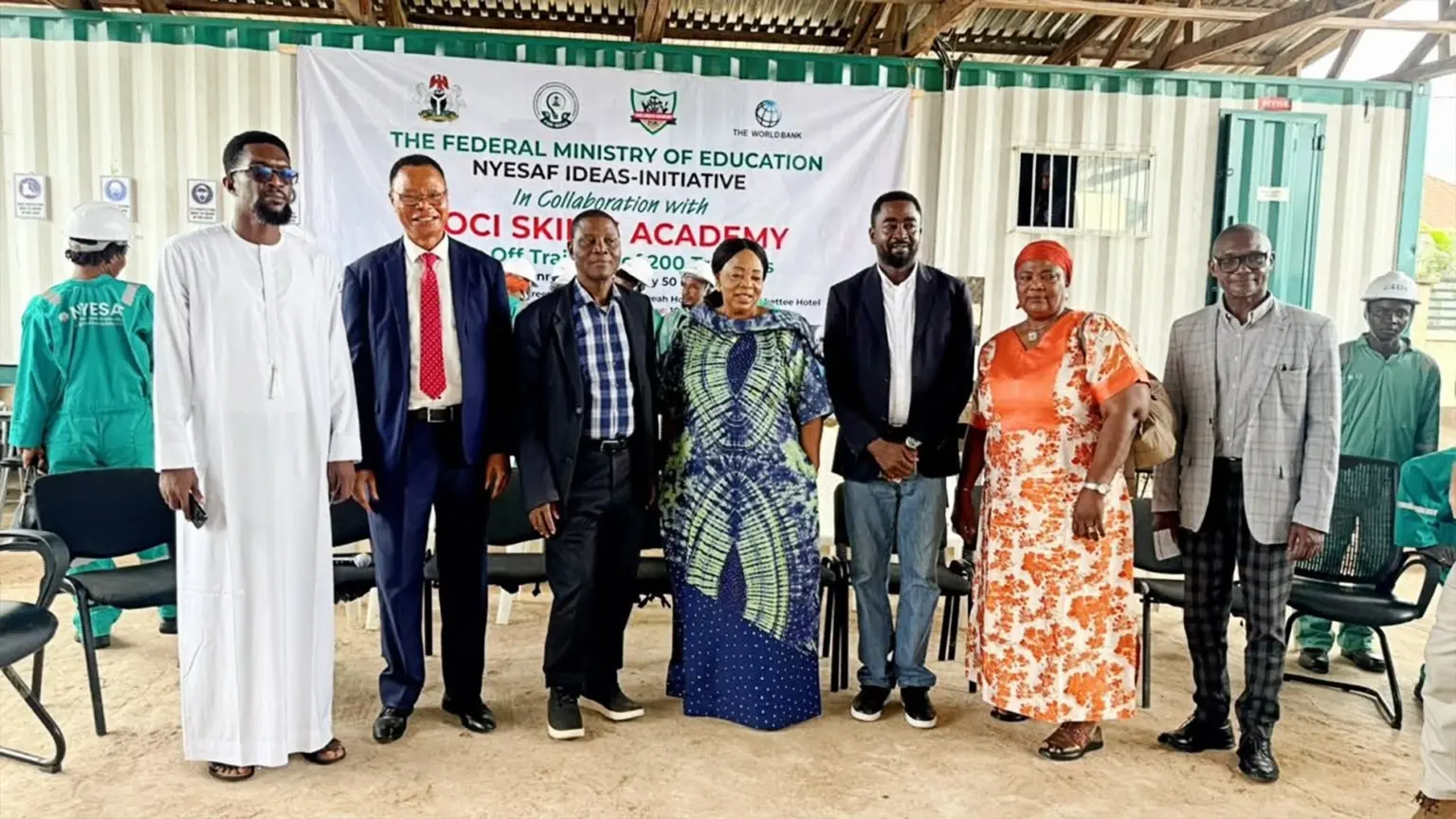
The Chairman of CSS Global Integrated Farms, Professor John-Kennedy Opara, has said the Federal Government and the World Bank are deepening efforts to equip Nigerian youths with practical, market-ready skills as part of a broader push to expand employment, entrepreneurship and food production.
Prof Opara disclosed this on October 1, 2026, in Gora, Nasarawa State, during the commencement of a six-month training programme under the Investment in Digital and Employability Skills (IDEAS) Project, implemented by the Federal Ministry of Education with support from the World Bank.

The CSS Chairman, represented by the farm’s Training Manager, Victor Umunakwe, said the programme was designed to move beneficiaries beyond classroom knowledge by combining theoretical instruction with hands-on training in crop production and animal husbandry.
He urged the trainees to approach the six-month programme with discipline, punctuality and commitment, stressing that the ultimate objective was to make them economically productive rather than simply award them certificates.
According to him, the training is intended to give participants practical and entrepreneurial competencies capable of helping them secure employment, establish businesses and contribute to Nigeria’s food security and economic growth.
Prof Opara said the initiative also addresses a persistent disconnect between academic qualifications and the practical skills demanded by employers and the labour market.
He said strengthening practical skills among young Nigerians was particularly important in agriculture, where improved technical capacity can support both employment creation and domestic food production.

The National Project Coordinator of the IDEAS Project, Mrs Blessing Ogwu, represented by Mrs Susan Ekoja, said the programme had recorded progress in strengthening technical and vocational education and training across Nigeria.
She said the project had invested in infrastructure, equipment and human-capacity development, while about 4,000 technical teachers and instructors had received training.
Mrs Ogwu further disclosed that approximately 80,000 Nigerians had been reached through various training service providers across the country.
She urged the new beneficiaries to treat the programme as an opportunity to acquire skills that could translate into employment and enterprise creation, rather than approach it as another certificate programme.
Mrs Ogwu advised participants to attend training sessions regularly, ask questions, practise what they were taught and maintain discipline in their interactions with instructors and fellow trainees.
A key condition attached to the programme is a minimum 65 percent monthly attendance, which beneficiaries must meet to qualify for the ₦30,000 monthly stipend.
Mrs Ogwu stressed that attendance was not merely an administrative requirement but a critical component of the skills-acquisition process.
She said CSS Global Integrated Farms would continue to use practical agricultural training to expose young Nigerians to modern approaches to agribusiness, animal husbandry and crop production.
She said the farm’s involvement in the programme reflects the growing importance of private-sector training centres in helping close the gap between formal education and workplace requirements.
The beneficiaries also welcomed the initiative, with Falaye Funmilola and Idris Adamu expressing appreciation for the opportunity and saying the training had provided them with useful knowledge and practical skills.
CSS Global Integrated Farms has continued to provide training in agribusiness, animal husbandry and modern agricultural practices, positioning the facility as a practical training hub for young people seeking opportunities in the agricultural value chain.
The Organisers said the partnership involving the Federal Government, World Bank and training providers is aimed at sustaining practical skills development and improving the prospects of beneficiaries beyond the duration of the six-month programme.
The training comes against the backdrop of Nigeria’s continuing need to expand employment and entrepreneurship opportunities for its large youth population, while simultaneously strengthening domestic agricultural capacity and food security
