



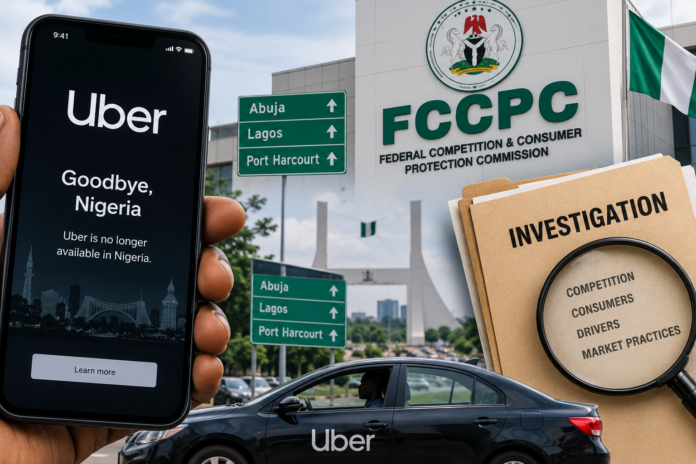
The Federal Competition and Consumer Protection Commission (FCCPC) has launched an investigation into Uber’s abrupt withdrawal from the Nigerian market, with particular attention to services left unfulfilled for customers.
The commission’s Chief Executive Officer, Tunji Bello, disclosed this on Sunday while speaking to Bloomberg, saying the regulator was examining the circumstances surrounding the ride-hailing company’s exit.
According to Bello, the investigation would focus on how Uber handled its obligations to customers before shutting down its Nigerian operations.
“We are looking into the manner of their exit, particularly in respect of unfulfilled services to the customers,” he said.
Uber announced on September 2 that it would discontinue its operations in Nigeria and Uganda, bringing its services in the two countries to an end on the same day.
The company said the decision followed a review of its operations but stressed that the withdrawal was limited to the two markets and would not affect its activities elsewhere in Africa.
“After a thorough review, we have taken the difficult decision to wind down operations in Nigeria and Uganda, effective September 2, 2026,” Uber said in a statement.
The exit has since opened up opportunities for competing ride-hailing platforms, with Bolt and inDrive indicating plans to increase their presence and capture a larger share of Nigeria’s ride-hailing market.
Uber’s departure also coincided with a major restructuring exercise by the company globally
The ride-hailing giant announced plans to cut more than 3,000 jobs worldwide as part of efforts to streamline its operations, reduce management layers and redirect spending towards its core business.
The FCCPC’s probe comes against the backdrop of years of challenges involving Uber and drivers operating on its platform in Nigeria.
Drivers have staged protests at different times over issues including fares, commission rates and their treatment by ride-hailing companies.
Similar grievances were reported during protests involving Uber drivers in 2017, 2023 and 2025, with operators calling for improved earnings and better working conditions.
The commission’s investigation is expected to determine whether Uber’s exit adequately addressed outstanding obligations to consumers who may have paid for services that were subsequently not provided.
The development places the company’s withdrawal under regulatory scrutiny even as other operators position themselves to benefit from the space created by its departure.
For consumers, the FCCPC’s intervention could also determine whether customers affected by the shutdown are entitled to refunds or other forms of redress for services that remained unfulfilled.
Further details on the scope of the investigation and any action against Uber are expected as the commission proceeds with its inquiry
