



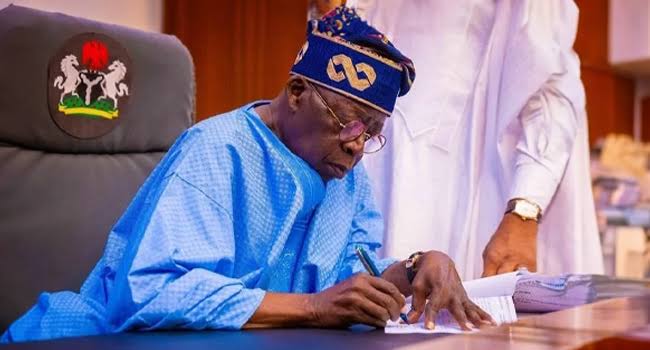
President Bola Tinubu has transmitted the National Senior Secondary Education Commission (Amendment) Bill, 2026, to the senate for consideration and passage.
Senate President Godswill Akpabio read the president’s letter during plenary on Thursday.
In the letter, Tinubu said the proposed legislation seeks to strengthen the administration and governance of public senior secondary education in Nigeria.
Tinubu said the federal executive council (FEC) approved the amendment bill at its meeting on April 30, 2026.
He added that the federal ministry of justice subsequently vetted and finalised the bill in line with drafting standards and constitutional provisions.
“In consequence of the above, the desire of this administration to strengthen the educational institutions in the national interest, the National Senior Secondary Education Commission Amendment Bill, 2026, is forwarded for legislative action by the National Assembly,” he said.
Tinubu said the proposed legislation forms part of his administration’s efforts to strengthen educational institutions in the national interest.
The president urged the senate to give the bill expeditious consideration.
“While it is my hope that the Senate will consider the bill and grant it expeditious passage, please accept, Distinguished Senate President, the assurances of my highest consideration and personal regards,” the letter reads.
After reading the letter, Akpabio referred the bill to the senate committee on rules and business and directed the committee to report back to the chamber within one week.
The proposed amendment comes days after Tunji Alausa, minister of education, announced that the federal government would phase out the disarticulation policy separating junior secondary schools (JSS) from senior secondary schools (SSS).
Alausa said the policy, which requires JSS and SSS to operate separately both physically and administratively, had failed to achieve its objectives.
He said the arrangement had created imbalances in school enrolment, with some states recording overcrowded junior secondary schools alongside underutilised senior secondary schools.
The minister also said the policy contributed to the widening gap between primary and secondary school enrolment, disclosing that more than 20 million pupils who started primary education failed to transition to senior secondary school.
