



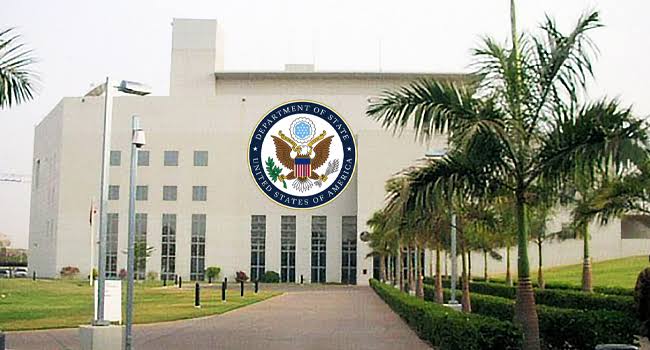
The United States Department of State has authorised non-essential staff and family members to leave its embassy in Abuja, citing a worsening security situation across Nigeria.
In an updated travel advisory issued Wednesday, the department warned Americans to reconsider travel to Nigeria starting April 8, 2026, due to rising concerns over crime, terrorism, kidnapping, civil unrest, and inconsistent healthcare access.
Nigeria remains under a “Level 3: Reconsider Travel” classification, while 23 states have now been placed under the stricter “Level 4: Do Not Travel” category.
Newly added states to the high-risk list include Plateau, Jigawa, Kwara, Niger, and Taraba, expanding the total number of restricted states.
The advisory stated that the evacuation decision was triggered by deteriorating security conditions, warning that threats such as terrorism, armed banditry, and communal violence remain unpredictable, with security operations capable of occurring without prior notice.
Northern states flagged as high risk include Borno, Yobe, northern Adamawa, Kaduna, Kano, Katsina, Sokoto, Zamfara, Bauchi, Gombe, Jigawa, Kogi, Kwara, Niger, Plateau, and Taraba.
In the South and Southeast, Americans were advised to avoid Abia, Anambra, Bayelsa, Delta, Enugu, Imo, and Rivers states excluding Port Harcourt due to persistent crime, kidnapping, and unrest.
The department highlighted that violent crimes such as armed robbery, carjacking, and ransom kidnappings are widespread, noting that U.S. citizens are often targeted due to perceived wealth.
It also warned that terrorist attacks could occur in public places including markets, shopping centres, hotels, places of worship, and large gatherings.
Additionally, the advisory raised concerns over Nigeria’s healthcare system, describing medical services as limited and inconsistent, often falling below U.S. and European standards.U.S. citizens planning travel to Nigeria were advised to enroll in the Smart Traveler Enrollment Program (STEP), remain vigilant, avoid crowds and protests, and establish personal safety protocols, including proof-of-life measures
