



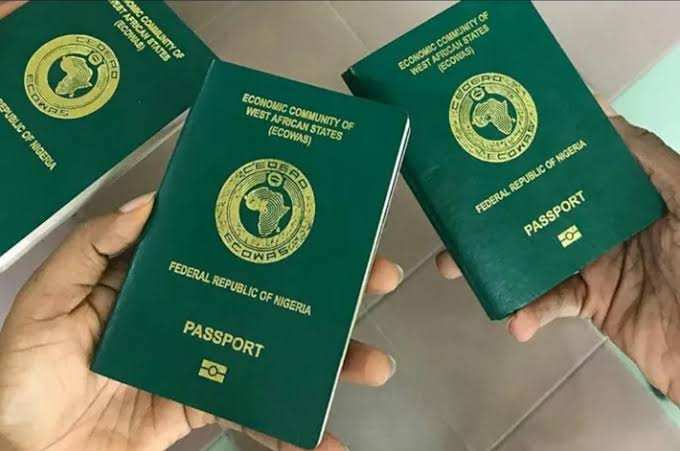
The Nigeria Immigration Service (NIS) has launched a centralised passport personalisation system capable of producing up to 5,000 passports every day, a significant jump from the previous 250–300 capacity at multiple centres.
Minister of Interior, Dr Olubunmi Tunji-Ojo, announced the development on Thursday during an inspection of the new Centralised Passport Personalisation Centre at the NIS headquarters in Abuja.
He described it as a game-changing reform for passport processing in Nigeria.
For the first time in 62 years, NIS is operating a single central passport production hub. This project is 100 per cent ready, and it will allow Nigeria to be more productive and efficient in delivering passport services,” Tunji-Ojo said.
Faster processing and delivery timelines
With the new facility, the Minister said the NIS can now meet daily passport demands within four to five hours of operation.
- He added that the reform would significantly cut down processing delays, bringing the country closer to achieving its goal of one-week passport delivery.
- The new facility, built in partnership with IRISMAT Technologies Limited, deploys advanced machines capable of producing up to 1,000 passports per hour.
“We promised two-week delivery, but with automation and optimisation, we are now pushing for one week,” Tunji-Ojo explained.
“This centre puts an end to the era of backlogs and delays. When this administration came on board, we inherited over 204,000 pending applications. That chapter is now closed. Everything is automated and efficient, ensuring Nigerians get value for their money,” he added.
- The centralisation also aligns Nigeria with global standards for passport production, enhancing the uniformity and integrity of its travel documents worldwide.
- Tunji-Ojo emphasised that the centralised production system is a step toward driving efficiency and improving service delivery for Nigerians, both at home and abroad.
- He noted that the initiative is consistent with President Bola Tinubu’s reform agenda, which aims to modernise key government institutions and strengthen public confidence in service delivery.
“This is more than just about documents; it’s about restoring trust and showing Nigerians that their government can deliver effectively,” he said.
