



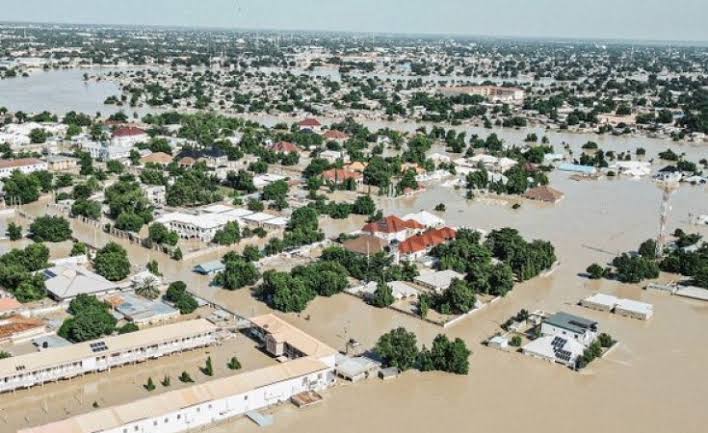
The Federal Ministry of Environment says it has established a National Flood Insurance Program that stands as a model of resilience and foresight.
Permanent Secretary Federal Ministry of Environment, Mr Mahmud Kambari, stated this at a National Technical Committee Meeting on the development of the National Flood Insurance Policy and Implementation Framework, held in Abuja the nation’s capital.
The establishment of a National Flood Insurance Program (NFIP) as encapsulated in the National Erosion and Flood Control Policy (NEFCOP) stands as a cornerstone program that will provide financial resilience by offering a safety net for individuals, businesses, and communities, enabling swift recovery from flood-induced losses.
“Alleviate Government Expenditure by Reducing the fiscal burden on federal and state resources allocated for emergency relief and reconstruction.
“Institutionalize risk-sharing and coordinated flood risk mitigation among the Federal, State, and Local Governments, as well as private sector stakeholders, particularly floodplain developers.” He said.
The Permanent Secretary represented by the Deputy Director Department of Erosion Flood and Coastal Zone Management in the Ministry, Mr Kunle Awojemila says, the escalating frequency and severity of flood events demand immediate and decisive action.
“As participants in this TCM, your expertise, insights, and commitment are invaluable. Let us approach this task with unwavering commitment and purpose, knowing that the lives, livelihoods, and future resilience of our communities depend on the solutions we craft today.” he said.
“Our collective mission during this meeting is to lay the groundwork for an effective and all inclusive NFIP. To achieve this, we will focus on comprehensive Analysis: Delving into the underlying causes of recent flood events, such as those in Borno, Jigawa, Ondo, Anambra, Benue, Delta, etc. to inform our policy framework.”
“Stakeholder Engagement; We will have to bring together government entities, insurance industry leaders, environmental experts, and community representatives to foster a collaborative approach in developing a holistic sustainable flood insurance program.
“Policy Formulation; Crafting a robust insurance policy that addresses the unique challenges posed by flooding in Nigeria, ensuring accessibility and affordability for all citizens.
Implementation Roadmap; Establishing clear timelines, responsibilities, and monitoring mechanisms to translate policy into actionable outcomes.” He stated.
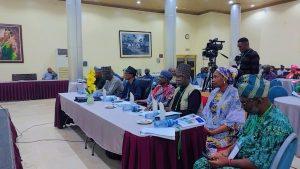
According to him, the recent floods across the country serve as stark reminders of our nation’s vulnerability to natural disasters.
The Director Erosion Flood and Coastal Zone Management in the Ministry, Mr Usman Bokani emphasised the need for a coordinated and sustainable approach to managing flood risks in the country.
“Our rural communities, coastal zones, and low income populations continue to bear the brunt of these disasters, with devastating economic, social, and environmental consequences.” He stated.
He said, “We do not need to look far for evidence, just recently, the community of Mokwa in Niger State experienced one of the most catastrophic floods in recent memory.
“Sudden torrential rains led to flash floods that claimed over 200 lives, left, thousands homeless, and swept away homes, farmlands, and markets.
“The magnitude of loss both human and economic was staggering. Families lost everything with no safety net to help them rebuild. Entire livelihoods were washed away in a matter of hours.”
Mr Bokani, explained that it is urgent for Nigeria to adopt proactive resilience measures, Including a national flood insurance scheme.
He also explained that the purpose of the meeting is to develop a national framework that will guide the implementation of a robust and inclusive flood insurance policy that protects the most vulnerable, supports swift recovery, and strengthens national resilience.
“During the course of the meeting, we will engage in In-depth technical sessions, policy reviews, and collaborative planning.
“We will explore models for financing, risk pooling, regulatory alignment, and community level delivery mechanisms.
“Our focus is not just on policy formulation, but on practical implementation strategies that reflect Nigeria’s realities and needs.” He added.
Mr Bokani urged stakeholders to make recommendations and outcomes for a strong foundation for a resilient and sustainable flood insurance framework for Nigeria.
Special Adviser to President on NEC and Climate Change Rukaiyatu El-Rufia says by working together, stakeholder can develop effective flood insurance solutions that meet the unique needs of Nigerians.
“As we take action today to protect our homes, businesses, and communities from the devastating effects of flooding, we can learn from best practices from other parts of the country and from the world.
“Let’s prioritize flood insurance and build a more resilient future for ourselves and for future generations.” She added.
The National Coordinator, Agro-Clamatic Resilience in Semi-Arid Landscape ACRESAL, Mr Abdulhamid Umar urged stakeholders to bring out workable, implementable policies that will be seen classically.
Representative of the Nigeria Agricultural Insurance coperation, NAIC, Mr Mahmud Umar says NAIC is ready to partner with all organizations and the federal government of Nigeria to see that insurance penetrates down to the common man.
“In NAIC we have policies for the production value chain, processing value chain, storage, key man insurance, which takes care of human lives, we are excited to partner with you in the implementation framework.” he added
