


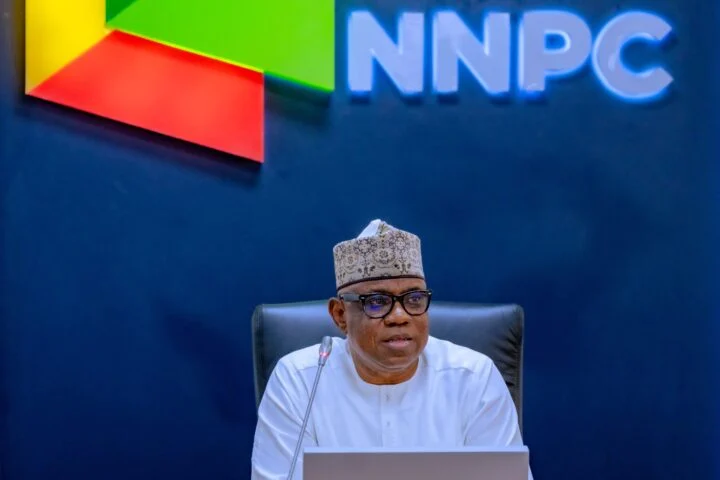
The Group Chief Executive Officer of the Nigerian National Petroleum Company Limited (NNPCL), Bayo Ojulari, has once again failed to appear before the Senate Committee on Public Accounts, defying a 10-day ultimatum to personally address concerns over ₦200 trillion in unaccounted funds.
At Thursday’s session, Ojulari opted to send a team of representatives in his place. But the committee, led by Senator Aliyu Wadada, rejected the delegation, insisting that only the GCEO can respond to the 11 major audit queries raised in the company’s financial statements.
Lawmakers described his repeated absence as a “deliberate affront” to the National Assembly and a clear breach of constitutional oversight obligations. Wadada, visibly displeased, warned that the committee will issue a final date for Ojulari’s personal appearance and hinted at possible sanctions if he fails to comply.
“This is a national institution. The refusal of the NNPCL GCEO to appear undermines not only this committee, but the principles of accountability and transparency that this chamber stands for,” Wadada stated.
The Senate had earlier flagged alarming discrepancies in the corporation’s audited accounts, raising red flags about financial mismanagement and a possible cover-up of large-scale revenue losses.
The committee is now weighing constitutional options, which could include issuing a subpoena or invoking penalties, as outlined under the legislative powers of the Senate.
NNPCL, now a commercially-run limited liability company following the Petroleum Industry Act (PIA), is still subject to legislative scrutiny—particularly concerning its stewardship of public funds and national assets.
The ₦200 trillion figure under scrutiny spans various operational years and audit periods, with senators expressing frustration over what they described as “stonewalling tactics” by the country’s most powerful state-owned enterprise.
This marks the third time the NNPCL CEO has failed to honor a formal summons by the Senate committee. Pressure is mounting for full transparency in what could be one of the largest public finance accountability probes in recent Nigerian history
